

April 14, 2026 – World Quantum Day 2026 is a timely moment to highlight how Oregon’s research community is aligning with national efforts and positioning the state for leadership in the growing quantum ecosystem.
Quantum Momentum at National Scale
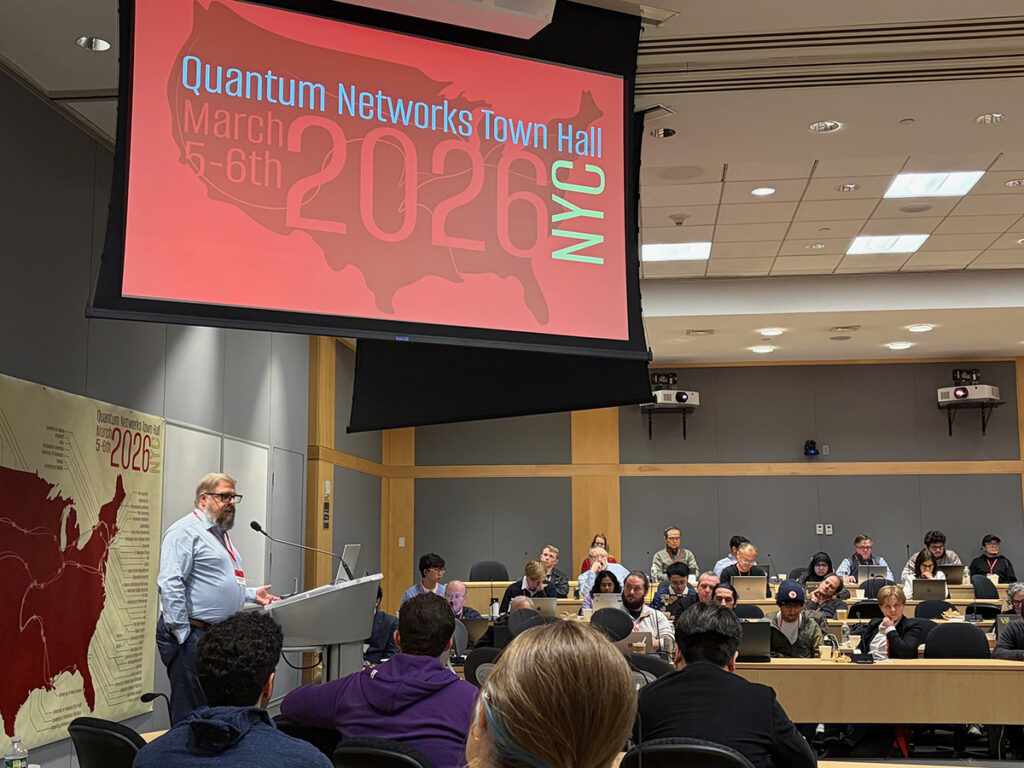
Quantum technologies are steadily moving from scientific laboratories into commercially relevant applications, with implications for secure communications, advanced computing, climate modeling, and materials discovery. The National Science Foundation in recent years has funded multiple regionally distributed, university‑led quantum networking testbeds, signaling that early experimentation at scale is critical to future deployment. The University of Oregon is one such grant recipient, selected by the National Science Foundation to lead a Quantum Virtual Laboratory focused on optical quantum technologies, positioning the state as a meaningful contributor to national‑scale testbed efforts.
Can Oregon Compete in the Emerging Quantum Ecosystem?
We believe that regions that act early to align research capabilities, networks, and talent development will be better positioned to lead the quantum era. Oregon’s strengths align well with these national priorities. The state benefits from a collaborative research culture that supports cross‑institutional initiatives; a robust, high‑capacity statewide fiber network operated by Link Oregon; deep manufacturing and photonics expertise; and a longstanding commitment to equitable access that will help prevent a future “quantum divide.” Just as importantly, Oregon is developing quantum‑capable talent, emerging from public universities, community colleges, and industry partners across the state.
Oregon’s Expanding Quantum Footprint
We are pleased to see the growth in quantum-focused research efforts across Oregon’s research institutions that are our members. In addition to the work underway at the University of Oregon, the Oregon Institute of Technology launched the Quantum Computing Innovation Center (QCIC) in 2024, emphasizing applied research, hands‑on training, and industry‑aligned workforce development. Oregon State University is also well positioned to support quantum‑adjacent research through its forthcoming NVIDIA‑powered supercomputer and strengths in computational science.
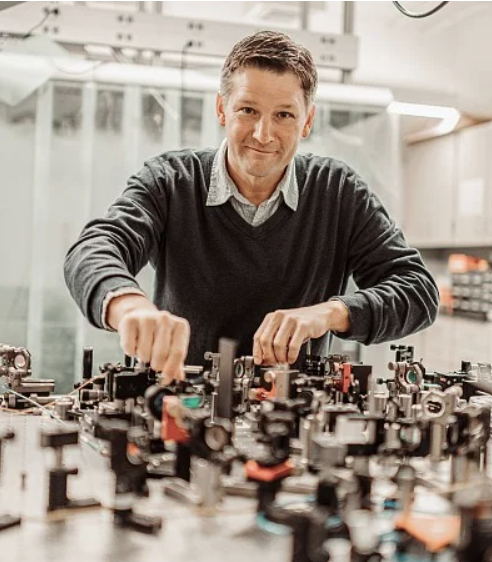
Link Oregon has articulated a vision with Oregon legislators for a statewide quantum networking testbed that leverages existing dark fiber to create a secure, scalable environment for quantum research and experimentation. Alongside our research university partners, we are collaborating with Lawrence Berkeley National Laboratory, operator of California’s Quant‑Net testbed, to explore next‑generation network operations models that could support hybrid classical‑quantum systems and, ultimately, a pilot quantum networking environment in Oregon.
Q-RISE — Embracing a Model of Statewide Collaboration
Infrastructure alone, however, is not sufficient. Q‑RISE, a statewide working group led by Link Oregon and university partners, is focused on strengthening the workforce pipeline by aligning infrastructure planning with curriculum development and research training. As Prof. Ram Durairajan of the University of Oregon and Chief Scientist at Link Oregon notes, “Quantum momentum in the real world will require that we push multiple levers in parallel—the research, the infrastructure, and the workforce pipeline.” Q‑RISE represents an important step in coordinating those efforts.
With sustained federal and state investment, continued collaboration among institutions, and strategic use of existing network infrastructure and research talent, Oregon’s quantum ecosystem is well positioned to contribute meaningfully to the nation’s quantum future—while ensuring that the benefits of this emerging technology are shared broadly across the state.